After the drill: why PCB edges still fail inspection
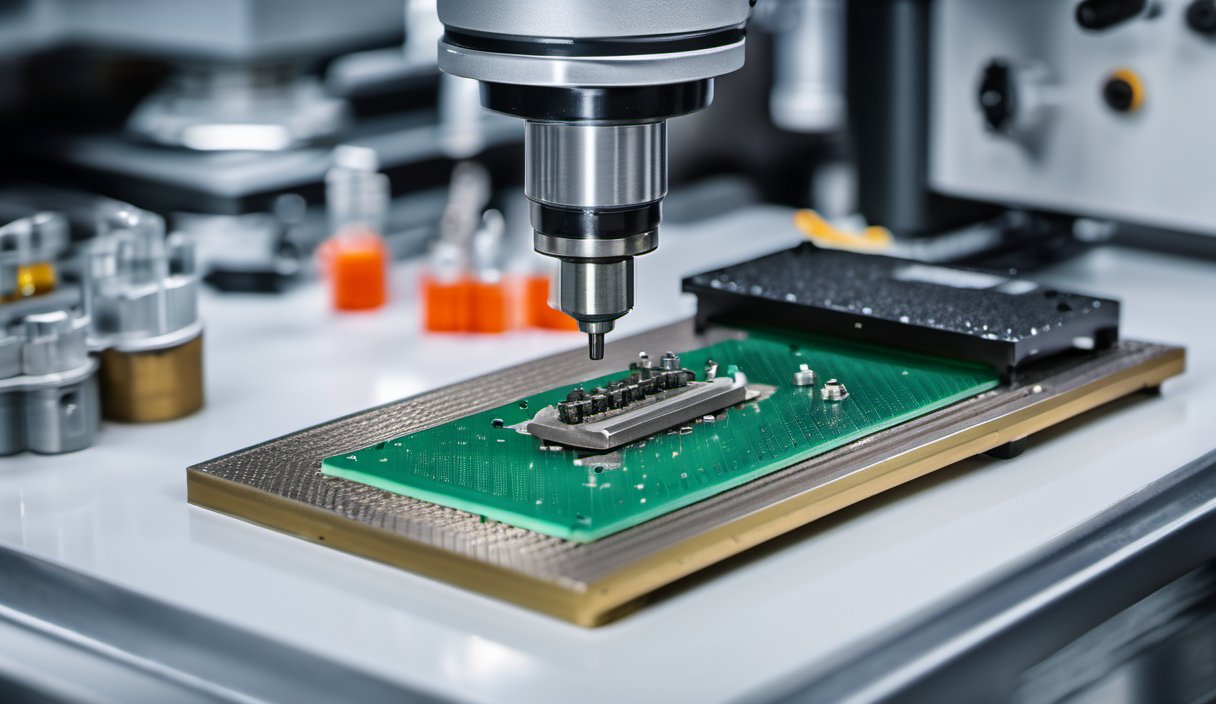
When a drilled board fails inspection, the first suspect is usually the drill. In a PCB line, most of the remaining defects are created or left behind by the steps after drilling.
What is actually on the surface
| Defect | Where it comes from | Consumable that removes it |
|---|---|---|
| Resin overflow | Plugging and pressing | Ceramic abrasive brush roller |
| Burr after mechanical or laser drilling | Hole exit | HD high-density brush roller |
| Copper particles and nodules | After plating | HC high-cut brush roller |
| Oxide or press-plate residue | Lamination and pressing | Press-plate cleaning brush |
The drill and the brush are usually bought from two suppliers. That makes root-cause analysis slow, because neither party sees the whole sequence.
Grit is a process variable
Ceramic brush rollers are supplied from 240# through 3000#, HD brushes from 320# to 1500#, HC brushes from 320# to 800#. A sequence that works on a rigid FR4 build may be too aggressive on a thin flexible laminate.
Ask for a grit sequence, not a single grit number. The defect, the board build and the machine width define the sequence.
What to send with an enquiry
- Machine model and brush width / core.
- Board build and copper weight.
- Current grit sequence and the defect you are trying to remove.
We supply the cutting tools and the finishing consumables, so the hole geometry and the surface result can be specified in one conversation.