Starting feeds and speeds, and what they assume
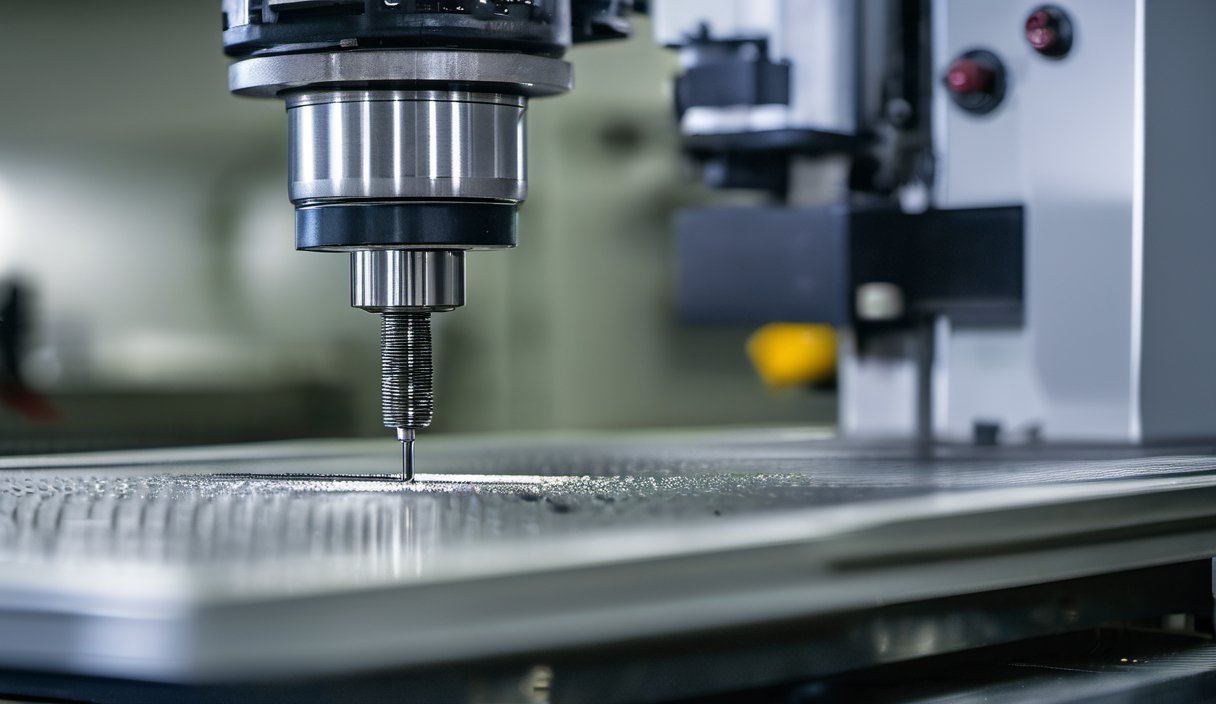
The 2026-2027 catalogue publishes high-speed drilling parameters for DC326 / DC426L on printed page 59. The table covers twenty diameters and five material groups. Four representative values show the shape of it.
Extract from printed page 59
| Material | D1 mm | Spindle rev/min | Feed mm/min |
|---|---|---|---|
| Aluminium alloy 5052 | 0.10 | 25,000 | 100 |
| Aluminium alloy 5052 | 1.00 | 16,000 | 1,200 |
| Stainless SUS304 / 316 | 0.10 | 15,000 | 45 |
| Carbon steel S45C / SS400 | 1.00 | 15,000 | 750 |
| Alloy steel SCM / SKD | 0.50 | 13,000 | 100 |
| Mould steel NAK / HPM | 1.00 | 7,000 | 210 |
Printed page 60 adds diameter bands for DC326 / DC326L / DCC326 / DC326XL and for the coated DC426 / DC426L / DC426XL series, including copper alloys, engineering plastics, Ti-6Al-4V, Inconel, aluminium casting and cast iron.
What the numbers assume
- A rigid setup with a suitable holder. Below 0.3 mm, holder runout dominates tool life.
- A standard flute length. Extended and extra-long geometries need a reduced feed.
- The stated coolant condition. Dry drilling in stainless is a different process.
If the edge looks polished rather than cut, the feed is too low. If a thin wall rings, check the assembly before reducing spindle speed.
Change one variable at a time, and record the part number with the result. That is what makes the next order repeatable.